The solar panels mounted on your roof are the beating heart of the solar system on your home or business. With so many manufacturers and models out there it can be daunting to know whether you are getting the right panel for your property.
Hopefully in this guide we will be able to answer some of the questions which you might have about panels and give you some examples of our favourites that we are installing currently.
How panels have developed
Panels have come along way since we started installing back in 2014. When we first started the average panel rating was around 250W. We are now installing 470W panels and this keeps rising incrementally as technology advances.
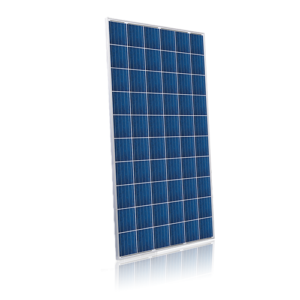
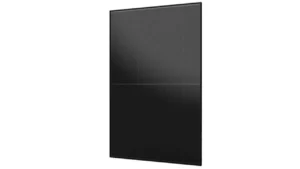
Its not only the rating of the panels that have moved on but the aesthetic too. You rarely see any new installations using silver frames and blue cells anymore (polycrystalline). Panels are predominately black frame, black back sheet and black cells (monocrystalline).
Types of Solar Panels
The two main types of solar panels used in the UK are monocrystalline and polycrystalline.
Polycrystalline
These panels are made by melting multiple silicon crystals together which gives the panels a slightly blue tint. These panels are generally cheaper but less efficient.
Monocrystalline
Monocrystalline are the most used panels on roofs today. These panels are made with single crystal silicon which gives them a solid black darker look. These panels are more efficient with a rating of 17%-24%.
Stringing
Panels are mounted on your roof. Which fixing system we used depends on if your roof is pitched or flat and what type of roof covering you have. To find out more about this check out our article on Fixings Systems.
Panels are divided into strings. A string is a set of panels which are traditionally connected into one another in series with two dc cables (a positive and a negative) running into the inverter. Strings are organised based on a few factors.
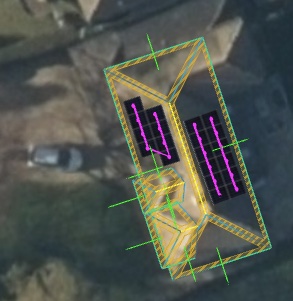
Your specific layout will depend on how your solar system will be strung. The team at Helios will do all of this during the design phase of your solar installation. With over a decade of experience there is nothing we haven’t come across before and we can advise you on the best fit for your property.
Check Out our go to panel we are installing at the moment:
Aiko Neostar 2S 470W N-Type ABC, 54 Cell, Mono Glass All Black, Gen 2

Specification summary:
Monocrystalline
Dimensions 1134mm x 1757mm
Efficiency 23.6%
Power rating 470W
25 year product warranty
Data Sheet:
Neostar-2S_188-AIKO-A-MAH54Mb-440-470W_1757x1134x30mm_DS_EN_2407_V1.3 (1)